
Your Air Conditioner Doesn’t Have to Do All the Work

When summer temperatures climb, most of us instinctively reach for the thermostat.
Air conditioning has become one of the greatest comforts of modern living, and on the hottest days, there’s no substitute for it.
But what if your air conditioner didn’t have to carry the entire load?
Keeping your home comfortable isn’t just about making cold air. It’s about managing heat before it builds up, improving airflow throughout your home, and taking advantage of cooler outdoor temperatures whenever possible.
The result can be a more comfortable home, lower energy bills, and an air conditioner that doesn’t have to work quite so hard.
Start with the Heat
Before you can cool your home, it helps to understand where the heat comes from.
Sunlight heats your roof all day long. That heat transfers into your attic, where temperatures can easily exceed 130°Fduring the summer. Without proper ventilation, that trapped heat slowly radiates into your living spaces, making your air conditioner fight an uphill battle.
Heat also enters through your windows, especially those facing east and west that receive direct sunlight. In many homes, windows are one of the largest sources of unwanted heat during the summer.
Simple improvements like blackout curtains, thermal curtains, or closing blinds during the hottest part of the day can significantly reduce solar heat gain. Exterior shade trees, awnings, professionally installed window film, and energy-efficient replacement windows can also help keep your home cooler before your air conditioner ever turns on.
If you’re considering window film or upgrading your windows, A-1 Glass is a trusted local company we’ve confidently recommend to homeowners. They offer window film and energy-efficient window solutions that can make a noticeable difference in both comfort and energy efficiency.
Cooking, electronics, lighting, and even the people inside your home all add a little more heat.
The less heat your home gains throughout the day, the less work your cooling system has to do.
Air Movement Makes a Difference
One of the simplest ways to feel cooler isn’t lowering the temperature.
It’s moving the air.
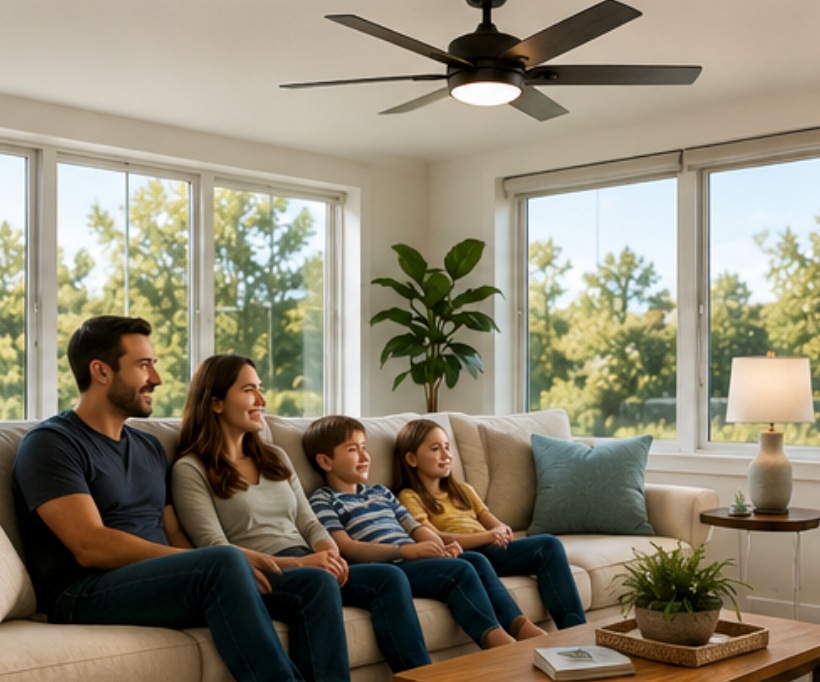
Ceiling fans don’t actually cool the room. Instead, they create a gentle breeze that helps your body cool itself more efficiently through evaporation. Many homeowners find they can raise their thermostat a few degrees while maintaining the same level of comfort.
The key is remembering to turn ceiling fans off when no one is in the room. Fans cool people, not empty spaces.
Don’t Forget About Your Attic

Your attic has a tremendous impact on the temperature inside your home.
A properly ventilated attic allows hot air to escape instead of collecting beneath your roof. Ridge vents, soffit vents, and powered attic fans all play a role in helping your home breathe.
Many homeowners are surprised to learn that reducing attic temperatures can also help extend the life of roofing materials while improving overall comfort.
We’ll explore attic ventilation in much greater detail in next week’s blog.
Open the Windows at the Right Time
Here on California’s Central Coast, we’re fortunate that summer evenings often cool down considerably.
Instead of relying on air conditioning overnight, many homeowners can take advantage of those cooler temperatures by opening windows after sunset and allowing fresh air to move through the house.
This simple habit can remove much of the heat that built up during the day before the next morning arrives. If you want to supercharge this effect you may want to look into a quiet whole house fan.
Today’s Whole House Fans Are Different
If you’re picturing the loud, rattling whole house fans from decades ago, it’s time for another look.
Modern whole house fans are dramatically quieter, more energy efficient, and much more refined than the older systems many people remember.
They can quickly exchange the warm indoor air for cooler evening air, helping your home cool naturally. Leaving them on overnight amplifies this effect, cooling off your homes structure too, while using only a fraction of the electricity required by air conditioning.
We’ll compare today’s whole house fans to older models later this month.
Small Improvements Add Up
Often, staying comfortable isn’t about one major upgrade.
It’s about several smaller improvements working together.
Adding insulation where it’s needed, sealing air leaks, improving attic ventilation, using blackout curtains during the hottest part of the day, running ceiling fans in occupied rooms, and taking advantage of cool evenings can all reduce how hard your air conditioner has to work.
Together, those improvements can make a noticeable difference in both comfort and energy use.
Keeping Your Home Comfortable

Every home is different.
Some homes benefit most from improved attic ventilation. Others are excellent candidates for a whole house fan. Sometimes simple maintenance or airflow improvements make the biggest impact.
At Elect Electric, we enjoy helping homeowners understand how their home’s electrical systems contribute to comfort and energy efficiency.
Sometimes the best solution isn’t adding more cooling—it’s helping your home work smarter.
Final Thoughts
Your air conditioner is one of the hardest-working appliances in your home.
The less it has to struggle against trapped heat and poor airflow, the better it can do its job.
This summer, don’t just think about making colder air.
Think about helping your home stay cooler in the first place.
The Heat Is On, but with a few smart improvements, your home can stay comfortable while using less
energy and putting less strain on your cooling system.
SEO Keywords
air conditioner efficiency
summer home cooling
reduce air conditioning costs
whole house fan
attic ventilation
attic fan
ceiling fan tips
blackout curtains
energy efficient home
Central Coast home comfort
Elect Electric


Comments