
Smart Meters, Health, and Home Safety

Smart Meters, Health, and Home Safety
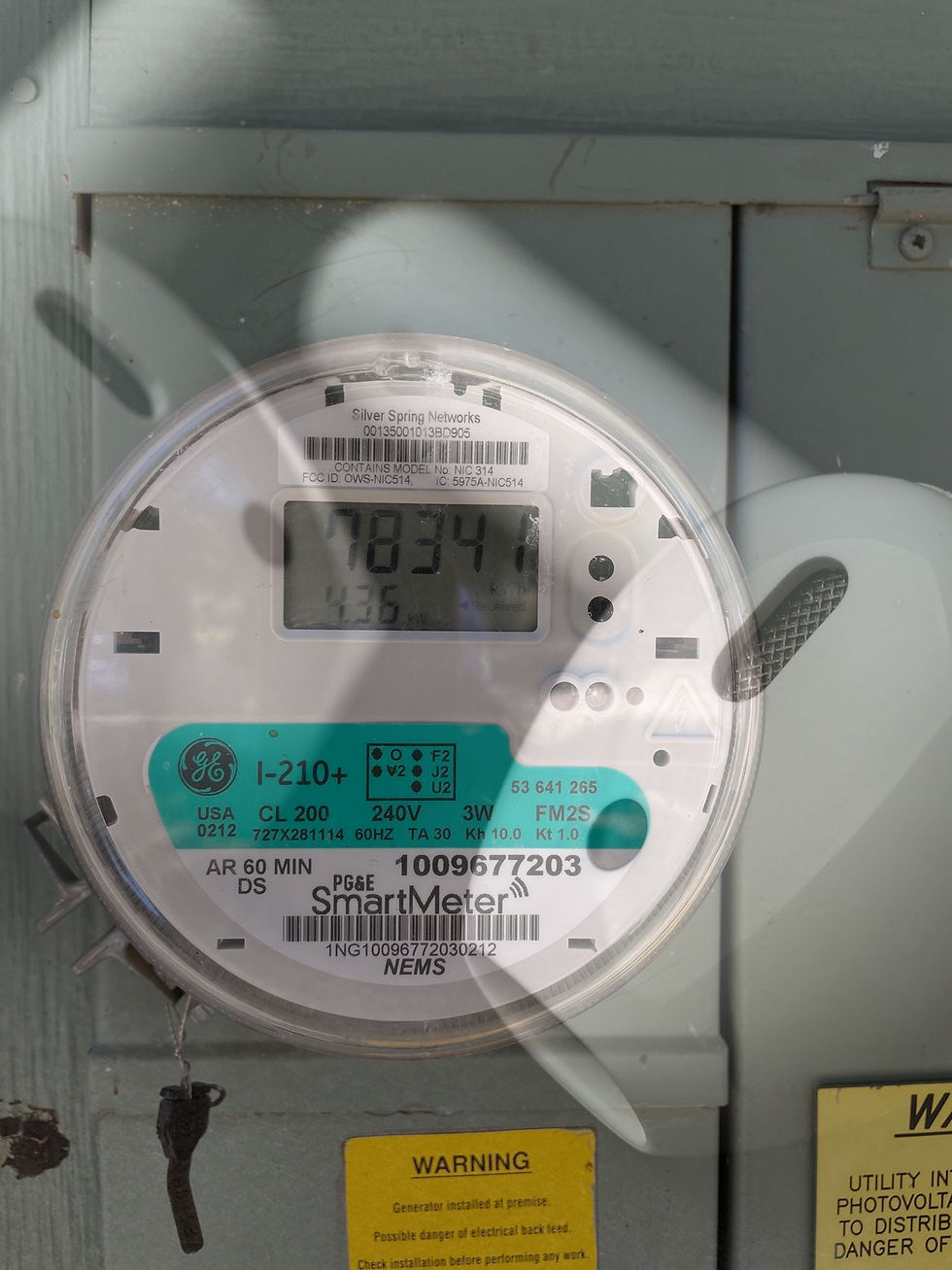
A Practical, Grounded Look—Without Dismissal or Hype
If you’re concerned about smart meters, your concern deserves respect—not ridicule and not fear-based marketing. Smart meters sit at the intersection of health, technology, home safety, privacy, and trust, and it’s reasonable to want clarity. This article is designed to give you practical reference points, not slogans, so you can compare smart meters to things you already use and decide what level of risk feels acceptable to you.
First, a grounding question
Most of us already accept some level of exposure to modern technology:
We listen to podcasts on our phones
We use Wi-Fi in our homes
We rely on cellular networks
We live near power lines
We use appliances that emit electromagnetic fields
The question isn’t “Is there exposure?” The real question is: where does a smart meter fall compared to the exposures I already accept?
What kind of “radiation” does a smart meter emit?
Important clarification: not all radiation is the same. Smart meters emit radiofrequency (RF) electromagnetic fields, which are non-ionizing, the same category as Wi-Fi, Bluetooth, and cell phones, and unable to damage DNA directly (unlike X-rays or gamma rays). This is fundamentally different from medical imaging radiation or nuclear radiation.
Does a smart meter affect the whole house?
A very common fear is whether radiation travels through outlets. The answer is no. Smart meters transmit data wirelessly through the air. They do not send RF through your electrical wiring. The electricity inside your home remains standard 60-Hz AC power. Your outlets, lights, and appliances do not become RF emitters. Only the meter itself is the RF source.
Practical comparison: smart meter vs everyday tech

Smart meter vs listening to a podcast on your phone
When you hold a smartphone close to your body while streaming a podcast or using Bluetooth earbuds, you are exposed to much higher RF energy at a much closer distance than from a smart meter. A smart meter is fixed, usually outdoors, and transmits in short bursts with a very low duty cycle. A phone is inches from your body and transmits continuously during use. If listening to a podcast in your garden feels acceptable, the RF exposure from a smart meter several feet away, through a wall, is generally far lower.
Smart meter vs Wi-Fi router
A Wi-Fi router transmits continuously and is often inside the home, closer to living and sleeping spaces. A smart meter transmits intermittently and is usually outside. In many homes, daily RF exposure from Wi-Fi is greater than from the meter, especially if the router is near bedrooms.
Why some people still don’t feel well—and why that matters
Some homeowners report headaches, sleep disturbance, anxiety, or feeling on edge. Large scientific reviews have not established a clear causal link between smart-meter RF and these symptoms. However, health is not only biological; it is also neurological and emotional. Stress and uncertainty can affect sleep, hormones, immune function, and overall well-being. That experience should not be dismissed, even if the cause is debated.
Fire risk: the concern that deserves the most attention
From a building-science perspective, fire risk is more serious than RF exposure. Smart meters do not create fires by emitting radiation. Most meter-related overheating or fire incidents are caused by old or corroded meter sockets, loose meter jaws, moisture intrusion, or degraded neutral connections. A smart meter installation can disturb aged components, revealing a weakness that already existed. This is especially relevant in older homes, coastal or fog-prone areas, and homes with EV chargers, heat pumps, or batteries. The meter is often blamed, but the socket is the problem.
Privacy: how PG&E uses smart-meter data

Smart meters collect interval usage data, not audio, video, or personal content. PG&E states this data is used for billing accuracy, outage detection, grid planning, and energy-use programs you opt into. Homeowners can review PG&E’s Smart Meter Data Privacy policy to learn how long data is stored, who can access it, whether third parties receive it, and what choices exist. A useful comparison is that smartphones, apps, streaming services, and social media typically collect far more detailed personal data than an electric meter.
What can happen without a smart meter
Without a communicating meter, electricity usage may be estimated for long periods. When an actual reading finally occurs, the adjustment can be dramatic. Large catch-up bills, sometimes in the thousands of dollars, have occurred. In these cases, the smart meter didn’t create high usage; it revealed it sooner, in smaller increments.
A framework you can use
Instead of asking whether a smart meter is safe or unsafe, a more helpful question is where it fits among the risks you already accept. For many homeowners, RF exposure from a smart meter is less than daily phone or Wi-Fi use. Fire risk is tied more to old electrical equipment than the meter itself. Privacy concerns are real but comparable to or smaller than many digital services.
Practical steps if you’re concerned
Address electrical safety first
Inspect or replace older meter sockets, check for corrosion or moisture, verify neutral and grounding connections, and consider thermal imaging if concerns exist.
Reduce RF exposure thoughtfully
Increase distance between the meter and sleeping areas if it brings peace of mind. Optimize Wi-Fi placement first, as it is often a larger exposure source. Avoid unverified shielding products that may create electrical hazards.
Stay informed

California homeowners often have options, including opt-out programs with possible fees. Knowing your choices reduces fear.
Final thought
Smart meters are not harmless perfection, and they are not the threat they are sometimes portrayed to be. For most homes, fear decreases with understanding, safety improves with proper electrical maintenance, and confidence comes from comparison rather than slogans. You deserve information that helps you decide, not pressure in either direction.
Quick Answers for Homeowners
• Do smart meters send radiation through my outlets or wiring?
No. Smart meters transmit low-power radiofrequency (RF) signals through the air only. Household wiring and outlets do not emit smart-meter radiation.
• Does a smart meter affect the entire house?
No. RF exposure is highest at the meter itself and drops quickly with distance. Interior living spaces typically see very low levels.
• Is smart-meter radiation different from Wi-Fi or cell phones?
Smart meters emit non-ionizing RF similar to Wi-Fi and phones, but usually at much lower power and for much shorter durations.
• Can smart meters cause fires?
Smart meters do not create fires on their own. Fire risk is usually linked to old, corroded, or damaged meter sockets that may be revealed during a meter change.
• Why do some people receive large bills after a smart meter is installed?
Smart meters don’t increase usage, but they do stop long-term estimated billing, which can reveal previously unbilled electricity use.
• What can homeowners do if they’re concerned?
Focus on electrical safety first, understand how your utility uses data, reduce high-exposure RF sources you control, and make the choice that best supports your peace of mind.
Bibliography / Sources for Further Research
World Health Organization (WHO) – Radiofrequency Fields & Health
Federal Communications Commission (FCC) – RF Safety Guidelines
National Institute of Standards and Technology (NIST) – Smart Grid Privacy & Cybersecurity
California Public Utilities Commission (CPUC) – Smart Meter Policies & Opt-Out Options
PG&E – Smart Meter Data Privacy and Usage Policies
Electric Power Research Institute (EPRI) – Smart Meter EMF Exposure Studies
Health Canada – RF Exposure from Smart Meters
U.S. Department of Energy – Advanced Metering Infrastructure Overview

Comments